This course is intended for engineers concerned with the performance and modeling of residential solar plus storage systems.

In this online engineering PDH course, data from a new-construction residential community equipped with rooftop solar and storage (S+S) is analyzed to determine the electricity cost savings that customers can realize by adopting demand-side resources. Demand-side resources include rooftop solar photovoltaics, batteries, building energy management systems, energy efficiency investments, electric vehicles and other small-scale assets distributed widely over the grid.
Demand-side resources can provide grid services by, for example, charging batteries at night and then discharging them during the day at times of peak demand, thus decreasing the magnitude of the peak demand that the grid must supply. Maximizing the potential of demand-side resources involves incentivizing electricity customers to use those resources in ways that benefit the broader electric grid. These incentives depend largely on the electricity cost savings that customers can realize by adopting demand-side resources. Determining these potential cost savings is a complex task, as is made apparent in the course.
This course is intended for engineers concerned with the performance and modeling of residential solar plus storage systems. This course includes a true/false and multiple-choice quiz at the end, which is designed to highlight the general concepts of the course material. This course is based on the following document: O’Shaughnessy, Eric, Dylan Cutler, Amanda Farthing, Emma Elgqvist, Jeff Maguire, Michael Blonsky, Xiangkun Li, et al. 2022. Savings in Action: Lessons from Observed and Modeled Residential Solar Plus Storage Systems. Golden, CO: National Renewable Energy Laboratory. NREL/TP-6A20-82103. https://www.nrel.gov/docs/fy22osti/82103.pdf.
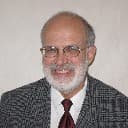
Civil Engneering faculty member for 27 years
Dr. Rossow is a graduate of the University of Michigan with B.S., M.S., and Ph.D. degrees. He is a licensed Professional Engineer in the State of Illinois. He taught civil engineering for over 35 years, including six years at Washington University in St. Louis and 29 years at Southern Illinois University Edwardsville, where he was the Chair of the Civil Engineering Department for ten years. His areas of expertise are in civil engineering and mechanics. He has consulted for various organizations, including government agencies and an international offshore drilling company. He has published numerous technical journal articles and technical reports for a variety of governmental agencies and private sector organizations. Mark P. Rossow, PE, PhD Licensed Professional Engineer in State of Illinois License No. 062.040560 Dr. Rossow is a graduate of the University of Michigan with B.S., M.S., and Ph.D. degrees. He taught civil engineering for over 35 years, including six years at Washington University in St. Louis and 29 years at Southern Illinois University Edwardsville, where he was the Chair of the Civil Engineering Department for ten years. His areas of expertise are in civil engineering and mechanics. He has consulted for various organizations, including government agencies and an international offshore drilling company. He has published many journal articles and technical reports.
