Calculate net, offset-eligible, priced and biogenic emission reductions for biogas projects in Alberta and assemble the documents, records and quality controls needed for verification.
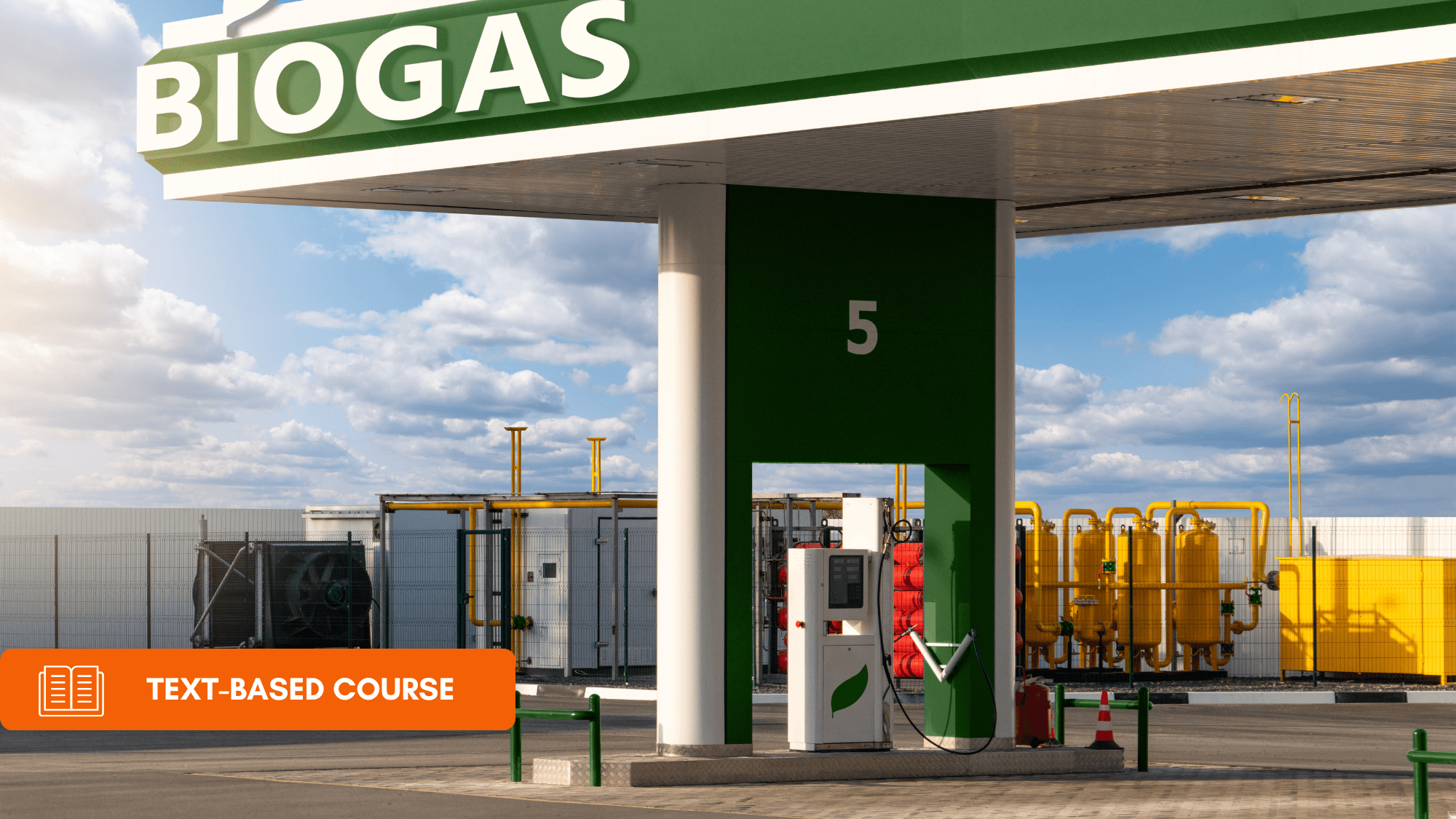
Once a biogas offset project has been scoped, its value rests on transparent calculations and evidence that stands up to third-party verification. This course sets out how net emission reductions are derived as baseline emissions minus project emissions, and how the result is separated into offset-eligible reductions from non-priced sources, priced reductions that are reported but not credited, and biogenic carbon dioxide reductions that are reported separately. It walks through the parameter-by-parameter quantification approach, showing for each source and sink whether values are measured or estimated, the method and frequency used, and the reasoning behind those choices.
Worked calculation structures cover baseline emissions from manure storage, passive anaerobic wastewater treatment using chemical oxygen demand (COD) balances and the methane conversion factor (MCF), avoided landfill decomposition, and displaced grid electricity, heat and pipeline natural gas. Project-side methods include flaring with destruction efficiency, catastrophic and cover venting, biogas and fossil fuel combustion, digestate storage and electricity use. The course closes with data quality management: the difference between documents and records, the evidence expected for each offset criterion, record requirements for metering and laboratory analysis, the auditable data trail, quality assurance and quality control (QA/QC) practices and liability for reverification.
What Will Be Covered:
Net emission reduction equations and the split into offset-eligible, priced and biogenic reductions
Measured versus estimated parameters, measurement methods and monitoring frequencies
Baseline methane from liquid manure storage using volatile solids, maximum methane producing potential and MCF
Passive anaerobic wastewater treatment emissions from inlet, outlet and sediment COD balances
Avoided landfill decomposition and displaced grid electricity, on-site heat and pipeline natural gas
Project emissions from flaring, catastrophic and cover venting, combustion, temporary digestate storage and electricity use
Global warming potentials and conversion of results to tonnes of carbon dioxide equivalent (CO2e)
Documents versus records and the evidence required for each general offset criterion
Record requirements for truck tickets, meter calibration, gas composition analysis, laboratory reports and dated photographs
QA/QC procedures, auditable data trails, record retention and liability for reverification

Leading Global Provider of Cutting-Edge Engineering CPD Courses
The Global Engineering Excellence Institute (GEEI) is a leading provider of Continuing Professional Development (CPD) courses designed to meet the evolving needs of engineers worldwide. Established in 2010, GEEI has a proven track record of delivering high-quality, industry-relevant training that empowers engineering professionals to stay at the forefront of technological advancements and best practices. Our comprehensive course offerings cover a wide range of disciplines, including civil, mechanical, electrical, and software engineering, ensuring that our learners receive the most up-to-date and practical knowledge. With a focus on practical application, GEEI's courses are developed by industry experts and are recognized by leading engineering bodies globally. We are committed to fostering a culture of continuous learning and professional growth, helping engineers achieve their career goals and contribute to the advancement of the engineering profession.
